Decoding Water Heater Noises: What’s Normal and When to Call for Repairs
Imagine it is the time of late at night. The house is quiet and peaceful, and you are ready to enjoy your sleep. Meanwhile, you hear an odd sound from your utility closet. Is it a knock or a rumble? Do not stress and observe with close attention. It is not always your broken water heater.
Some noises are normal, and some give you an alert that it is a serious problem, and get ready to take the required action. In this, you will get a detailed guide to understand the noises of your water heater. You will learn the difference between the normal sounds and the sounds that give you an alert to have a professional treatment.
Why Do Water Heaters Make Noise?
Sediment Buildup
Minerals settle at the tank’s bottom over time. When heated, trapped water bubbles through this thick layer, creating loud popping or banging sounds like popcorn cooking.
Heating Element Issues
On electric models, minerals coat the heating elements. This buildup forces the system to work harder, causing the unit to make hissing or crackling noises frequently.
Water Pressure Problems
High pressure inside your pipes can lead to whistling or rattling. This often means the pressure relief valve is struggling to manage the internal tank force.
Loose Components
Sometimes the fix is simple. Loose pipes or vibrating fittings can create annoying humming or shaking sounds every time the hot water starts flowing through your home.
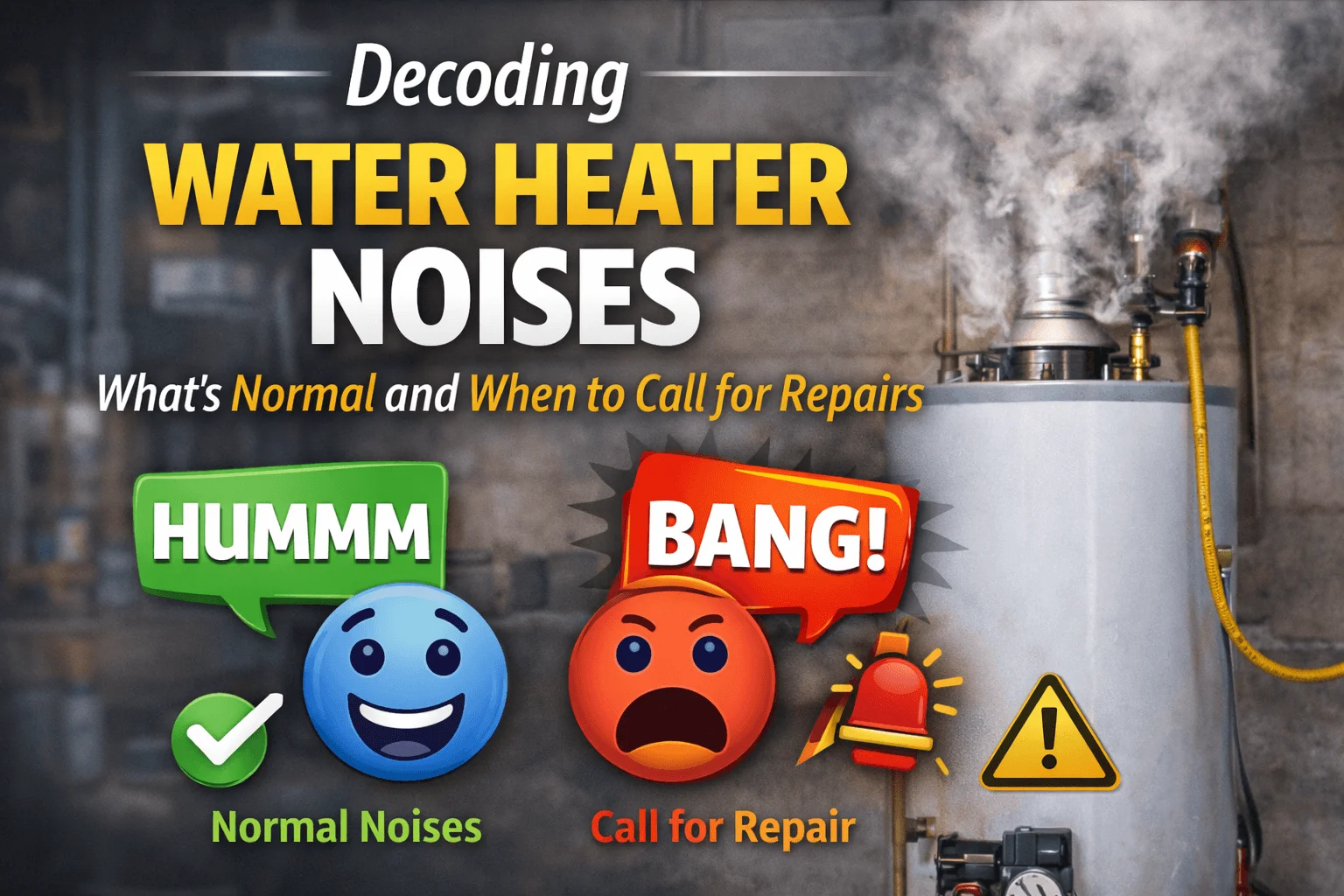
Normal Sounds (Don’t Panic!)
The Hissing/Sizzling
When water drips onto the hot burner or when the water heats up very fast, this sound usually happens. It usually means there is nothing serious to worry about, so it is normal in many units.
The Low Humming/Rumbling
If your gas or electric water heater is making a low humming sound, then do not worry, it is normal. It indicates that the unit is working in a normal state to keep your water at the right temperature.
The Occasional “Click” or “Pop”
When the heater turns on, you will often hear a light click or pop. When the burner or the heating part switches on or off, to keep the water at the right temperature, this sound happens.
The Red Flags (When to Take Action)
Loud Popping or “Banging” (The Kettle Effect)
When layers of dirt and minerals build up at the bottom of the tank, that time this sound happens. The Kettle effect is when the burner heats the metal, bubbles of steam get trapped under this dirt, and then pop. It can badly affect the bottom of the tank. It becomes the cause of cracks and makes your water heater work much less efficiently.
High-Pitched Whining or Screeching
There is a thick layer of minerals stuck to the electric heating parts when you hear a high-pitched, screeching sound. It made them vibrate under pressure. Sometimes there can be a blocked valve or a venting problem. The sound indicates that your system is struggling, and you need to have a professional check it.
Water Dripping or “Drip-Hissing”
If you hear a constant drip or a “drip-hiss,” you likely have a leak. This happens when water escapes the tank and hits the hot burner assembly. Leaks require immediate attention because even a small drip can lead to major water damage in your home and complete failure of the water heater.
Crackling or Grinding
Crackling or grinding sounds are serious red flags. These are usually caused by severe sediment buildup interfering with moving parts or a malfunctioning burner assembly. Because these noises often indicate that internal components are wearing down or failing, you should call a technician to prevent a total breakdown and ensure your safety.
Basic Maintenance: How to Keep it Quiet
The Power of Flushing
Draining your tank annually is the best way to remove sediment. This simple maintenance task prevents mineral buildup from hardening, which keeps your unit running quietly and extends its overall lifespan.
Temperature Checks
Keeping your thermostat at a moderate setting prevents overheating. When the temperature is too high, it accelerates scale buildup on the tank walls and elements, leading to those annoying and loud noises.
When to Call a Professional
Call a technician if noises persist after flushing or if you notice water pooling around the base. Professionals should always handle electrical issues, internal part replacements, or signs of a serious leak.
Conclusion
To keep things safe and comfortable for you at your home, you need to know the types of sounds you hear from your home. There are sounds that are part of how the water heater works. But having close attention to any new odd sound is very important. By doing a few simple things, like flushing out the tank once a year and keeping the temperature at a safe level, you can prevent most big problems.
Never ignore the noises that are heaping continuously. Do not wait until your water heater breaks completely, so take required action when you hear worrying sounds or see water leaking on the floor. Having a professional at the early stage will save your money and your home from massive damage.
Expert Help for Quiet and Reliable Hot Water Today
Never let the odd sound turn into a big problem and cause an expensive plumbing problem for you. Our experts provide a detailed inspection, including tank cleaning and quick repairs to keep your water heater running smoothly. To enjoy the comfort of your functional home with peace of mind, contact us today.