What’s the Difference Between a Main Line and a Drain Line?
Most homeowners treat their plumbing like a “set it and forget it” system until the day the water stops flowing down and starts coming back up. It’s a messy mystery that usually leads to one urgent question: how serious is this?
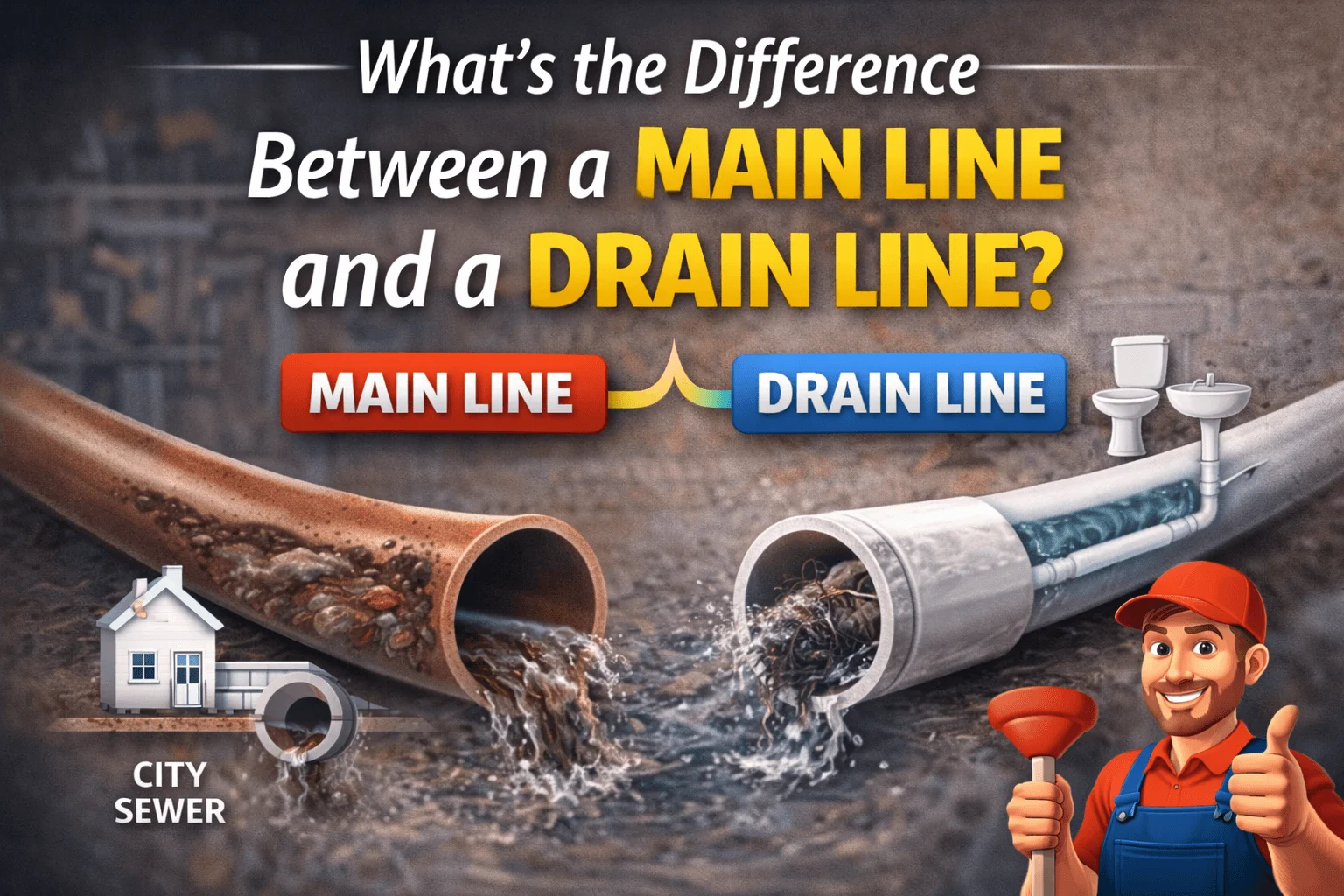
Your home actually operates on a hidden hierarchy of pipes. You have small, “secondary” lines that handle individual fixtures and one massive artery that carries everything away. Understanding the difference between the main line and the drain line is the key to your next move. This guide will help you determine if you’re facing a simple localized clog or a full-blown plumbing emergency.
Understanding the Drain Line (The Secondary Lines)
What it is
Drain lines are the secondary pathways of your plumbing network. These individual pipes lead away from every sink, tub, shower, and toilet in your home, acting as the specific exit routes that transport wastewater from the fixture to the larger system.
The Function
These are small-diameter pipes engineered for a specific task: handling waste from a single source. Because they only manage the volume of one fixture at a time, they are the first line of defense in keeping your household water flowing.
Symptoms of a Drain Line Clog
When a secondary line fails, the problem remains isolated; for instance, you’ll notice only the kitchen sink is slow. Crucially, using one fixture—like flushing a toilet—doesn’t affect any others, confirming the blockage is limited to that specific pipe.
The Solution
Most drain line issues are minor and easily managed without professional help. A simple plunger usually solves the problem by creating enough pressure to dislodge the trapped debris, restoring normal flow to the affected fixture within just a few minutes.
Understanding the Main Line (The Sewer Line)
What it is
Consider the main line, the “main artery” of your home’s plumbing. It is the central, massive trunk of the entire system where every single secondary drain line eventually empties. It serves as the singular collection point for all wastewater before it exits your property.
The Function
The main line is responsible for the heavy lifting. It carries all the collective waste and greywater from your home out to the municipal city sewer or your private septic tank. It is the final bridge between your household fixtures and the outside world.
Symptoms of a Main Line Clog
A main line blockage is systemic: multiple fixtures will back up simultaneously. You will notice “reactionary” plumbing, such as flushing the toilet only to see water bubble up in the shower, accompanied by foul sewer odors rising from floor drains throughout your home.
Why Does the Distinction Matter?
The Scale of the Mess
The drain line clog is just a small problem that will stop you from using one sink or shower. On the other hand, the main line clog is much more problematic. This can cause damage to your entire home with messy sewage backing up.
The Tools Required
With a simple plunger or a hand snake, you can usually fix a small sink drain yourself. But resolving the problem of the main line requires more power. It is because professional tools are required to handle it. Like heavy-duty drain machines, high-pressure water jets, or special cameras to find the clog.
The Cost of Waiting
Ignoring a main line issue is a gamble you likely won’t win. What starts as a slow drain can quickly escalate into a massive plumbing emergency. Delaying professional help often leads to expensive repairs and professional restoration costs if sewage eventually backs up into your living spaces.
When to Call the Pros
- Stubborn Single Drain Clogs
When a plunger fails to clear a stubborn clog, the blockage is likely deep or consists of solid material like hair or grease. Continuing to force it can damage your pipes, making it time to bring in professional-grade equipment. - Basement Water Backup Signs
It is a huge warning sign that your main sewer line is failing if you see water pooling in your basement or on your lowest floor. It is pushing back into your home because dirty wastewater has nowhere left to go. To stop this from causing serious, long-term damage to your property, you need to call a professional immediately
- Constant Pipe Gurgling Noises
When no water is running, and you hear strange gurgling or bubbling noises in your pipes, it means there is trapped air or a deep blockage somewhere in your system. When the plumbing can’t “breathe” or vent properly, these sounds start to happen. Do not ignore this indication; it is a serious alert that you need to contact a professional to figure out the problem and to fix it the right way.
Conclusion
To keep your home functional and in good shape, you have to be well aware of the difference between your home’s main line and drain lines. This would keep you safe from expensive repairs. You can fix yourself if one sink is clogged. But you are definitely having a massive problem if you hear gurgling pipes or see clogs in several places at once. Handling issues at the early stage is way more effective. It is because taking them on a lighter note would make them a major emergency. Call a professional right away if a plunger does not work or water starts backing up, so that you can have the comfort of smooth-running plumbing with a secure home.
Contact Our Professional Team for Expert Plumbing Assistance
Never wait for a small clog to turn into a big and expensive problem. Our experts are ready, whether your sink is stuck or your main sewer line is backed up. Get in touch with us today for an efficient and reliable inspection to get your water flowing perfectly again.