
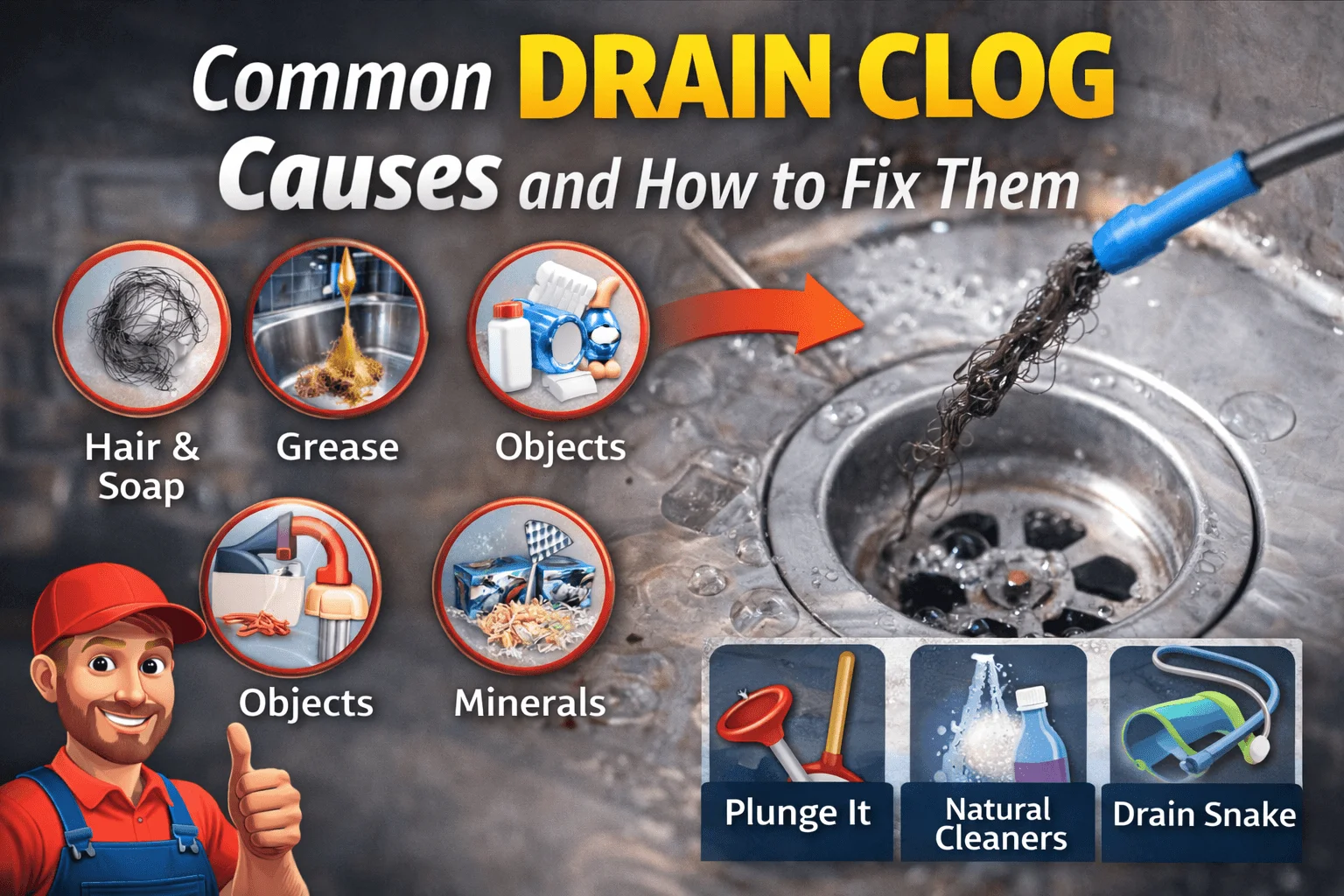
Common Drain Clog Causes and How to Fix Them
There is nothing quite like the sight of rising water in a sink to ruin a perfectly good morning. Whether it’s a slow-moving tub or a stubborn kitchen sink, a drain clog is one of the most common and frustrating home maintenance issues any homeowner will face.
To grab a plunger, it is important to find out why your drain is clogged. It is because knowing the cause is the best way to fix the problem for a long time. In this detailed guide, you will learn about the reasons for your pipe blockage. We will also guide you regarding the most suitable and efficient way to fix it yourself so that your water flows easily again.
Top 5 Common Causes of Clogs
1. Hair Buildup (Bathroom Sinks & Showers)
Hair is perhaps the most notorious culprit in bathroom plumbing. As individual strands wash down the drain, they easily snag on pipe walls or the pop-up stopper. Over time, this hair binds with sticky soap scum, creating a dense, tangled net that traps other debris and leads to a stubborn, slow-moving drain clog.
2. Cooking Grease and Fats (Kitchen Sinks)
It might look like liquid when it’s hot, but pouring grease down the sink is a recipe for disaster. As cooking fats cool, they solidify and harden inside your pipes. This waxy layer acts like glue, trapping food particles and coffee grounds, eventually narrowing the passage until the pipe is completely sealed shut.
3. Foreign Objects (Toilets)
Toilets are designed to handle only human waste and toilet paper. Unfortunately, many “flushable” wipes don’t actually break down, leading to massive obstructions. When you add paper towels, feminine hygiene products, or small toys into the mix, you create a physical blockade that usually requires professional tools or a heavy-duty plunger to clear.
4. Soap Scum Accumulation
You might think soap keeps everything clean, but regular bar soap is made with fats. These fats mix with minerals in your water to create a hard, sticky film called soap scum. Over time, this thick layer sticks to the inside of your pipes. This makes the space inside the pipe smaller, which makes the water drain much more slowly.
5. Mineral Buildup
If you live in a place with hard water, minerals like calcium and magnesium are always moving through your pipes. Over time, these minerals stick together and turn into hard crusts. This buildup makes it difficult for water to flow through. This happens a lot in older metal pipes. Eventually, these minerals can completely block the pipe or cause the metal to rust and break.
Simple Fixes for Homeowners
The Plunger Method
For most blocks, a plunger is your best friend. To get the best seal, ensure there is enough water to cover the rubber cup. For sinks, block the overflow hole with a damp rag to maintain pressure. Use firm, vertical plunges to force the obstruction through the pipe.
The Natural Flush
You don’t always need heavy tools for minor grease or soap buildup. Pouring a kettle of boiling water down the drain can often melt away waxy residue. For a deeper clean, a mix of baking soda and vinegar creates a fizzing action that helps break down light organic clogs naturally.
The Manual Clear
If the clog is reachable, a plastic drain snake can easily hook hair and debris. For tougher blocks, try cleaning the P-trap. Place a bucket under the U-shaped pipe, unscrew the slip nuts by hand, and remove any trapped gunk. It is a simple way to restore full water flow.
The Warning
While store-bought chemical cleaners seem convenient, they can do more harm than good. These harsh liquids generate intense heat and caustic reactions that can weaken PVC or corrode older metal pipes. Often, they sit on top of the clog without clearing it, creating a hazardous splash risk for you.
When the DIY Approach Isn’t Enough
Deep Clogs
If your plunger or hand snake isn’t reaching the blockage, the problem likely sits deep within your plumbing system. When water backs up into tubs or floor drains while running a sink, it is a clear sign that the block is well beyond your reach.
Recurring Issues
A drain that keeps clogging despite constant cleaning usually points to a bigger structural problem. This often indicates a cracked pipe, sagging lines, or invasive tree roots. In these cases, clearing the surface debris is only a temporary fix for a permanent issue.
Multiple Clogged Drains
When multiple fixtures—like a toilet, shower, and sink—clog simultaneously, you likely have a main sewer line issue. This is a plumbing emergency that requires professional equipment to prevent sewage from backing up into your home, requiring immediate attention from a licensed technician.
Conclusion
If you act fast and know what to do, then fixing a clogged drain is easy. Simple things like hair, grease, or dirt cause most of the blocks. By being careful with what goes down your pipes, you can often stop these problems before they start. Use of a plunger or natural cleaners works great for small clogs. There might be a bigger problem deep in your sewer lines if your drains stay clogged or if many sinks back up at once. Keep checking your pipes regularly and avoid using harsh chemicals that can cause damage. It will help to keep your plumbing in good shape.
In case a clog is not going away, then the best decision is to call a plumber who has the right tools to fix it safely.
Professional Help for Your Stubborn Drain Clog Issues
Never let a stubborn clog damage your pipes and ruin your entire planned schedule. After all your attempts to fix it, you could not fix it, and the block is persistent. Then, in this case, call our experts for a reliable and fast service. We will inspect and make sure that you enjoy your water flowing safely and smoothly again.